★★★★☆4.7(326 reviews)
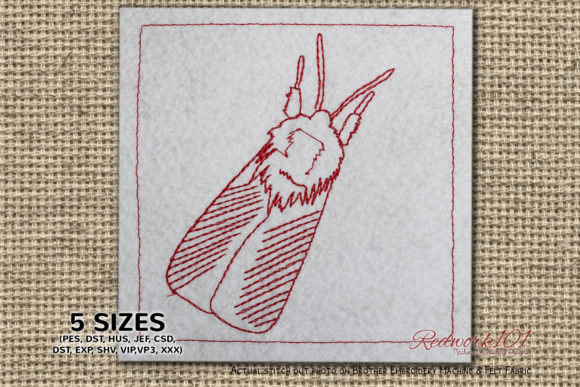
Orthoptera Redwork Review for Small Business Merchandise
First Impressions: A Rustic and Handmade Feel with Professional Potential
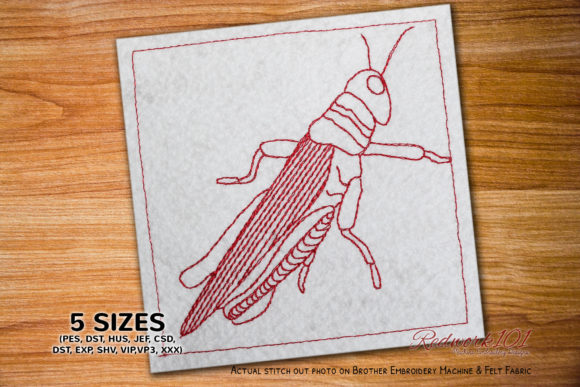
As an experienced embroidery designer, I always start by evaluating the visual personality of a machine embroidery design before considering its practical use. The title Orthoptera Redwork immediately gives me a sense of something classic and nature-inspired. The term "redwork" suggests a traditional style rooted in simplicity and boldness—often using red thread on white fabric, though the product description allows for flexibility in color choice.Where to Use with Caution: Practical Considerations
- Small Patch Sizes: The intricate details might get lost when scaled down. Always test at the intended size.
- Cap Fronts: Curved surfaces demand tight spacing and strong outlines. The outer box may help here, but consider simplifying the inner elements.
- Textured Fabrics: High stitch density can cause puckering or distortion on fabrics like denim or flannel. Stabilization becomes critical.
- Tiny Lettering: If the design includes text, check that it remains legible at smaller sizes. Avoid using it in places where readability is essential.
- Dark Uniforms: Redwork often relies on high contrast. Make sure your chosen thread colors pop on darker backgrounds.
- Frequent Washing: Designs with high stitch counts or complex outlines may degrade faster. Test durability on real materials your business will use.
Designer Tips for Using Orthoptera Redwork in Commercial Projects
- Test in Black and White First: Before finalizing thread colors, see how the design functions as a line drawing. This helps assess clarity and balance.
- Check Small Patch Performance: Resize the design and run a sample stitch-out to ensure it reads well at smaller dimensions.
- Review Thread Color Contrast: Especially for dark garments or frequent-use items. Choose colors that reflect your brand while remaining visible.
- Inspect Spacing and Density: Ensure stitches don’t crowd together or leave gaps, which can affect appearance and longevity.
- Confirm Hoop Size: If hoop size isn't provided, verify based on the design's footprint. Larger designs may require bigger hoops for stability.
- Use Proper Stabilizer: Especially on stretchy or thick materials. Tear-away or wash-away stabilizers can prevent fabric distortion.
- Create a Mockup for Approval: Use a printable mockup to show clients how the design appears on their actual products—whether it's a tote bag design or apron embroidery.
- Compare Beside Other Assets: Maintain a unified brand identity by ensuring this design fits with your logo, fonts, and color scheme.
- Verify Commercial Licensing: Before mass production, double-check whether the digital embroidery file permits commercial use. Some redwork-style designs come with restrictions.
⬇️ Download Free
Free download · No sign-up required
🔗 You Might Also Like
Bugs
As an experienced embroidery designer, I’m always on the lookout for versatile a...

Bugs
First Impressions: A Seasonal Statement in Bloom As an experienced embroidery de...
Bugs
As an experienced embroidery designer, I’ve reviewed countless machine embroider...
Bugs
As an experienced embroidery designer, I often evaluate machine embroidery desig...
Bugs
First Impressions of Whitefly Bug When I first laid eyes on the Whitefly Bug emb...
